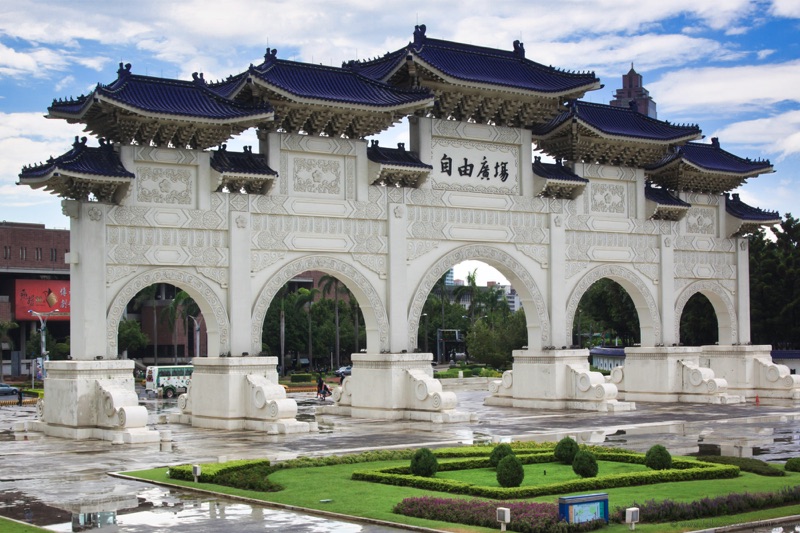
 The possible conquest of Taiwan is not being fought only with warships, missiles, and military aircraft. According to a study by German journalist and researcher Jürgen Kremb, Beijing has long been conducting a far quieter war: a strategy based on espionage, economic pressure, cyber operations, propaganda, and the infiltration of Taiwanese society.
Taiwan, the author argues, has become the world’s main laboratory for so-called “cognitive warfare”: a form of conflict designed not necessarily to destroy an enemy, but to confuse, divide, and paralyze it from within.
Winning Without Fighting
The objective attributed to the Chinese Communist Party is not limited to obtaining classified military information. The strategy is much broader: weakening public confidence in institutions, questioning the effectiveness of Taiwan’s armed forces, amplifying political divisions, and spreading the belief that resisting China is either pointless or too dangerous.
In this kind of conflict, propaganda does not need to convince everyone. It only needs to generate uncertainty, suspicion, and resignation. The real victory comes when a democratic society begins to doubt itself.
The study distinguishes this activity from ordinary soft power. Cognitive warfare has a hostile political purpose: to alter the perceptions and behavior of specific groups so that they act, knowingly or unknowingly, in the adversary’s interest.
The Role of the United Front
One of the main instruments is the United Front, a political structure of the Chinese Communist Party responsible for building relationships with individuals and organizations outside the party.
Its method is described as a form of “instrumental friendship.” Business associations, universities, cultural organizations, overseas Chinese communities, media outlets, and religious groups can become channels through which Beijing cultivates contacts, shapes opinions, and identifies potential collaborators.
Unlike traditional espionage, United Front activity often takes place in the open. Cultural events, sponsored trips, exchange programs, business opportunities, and academic partnerships can become environments in which individuals useful to Chinese strategic interests are identified and cultivated.
According to the study, this legal and apparently harmless network may form the first layer of much more secretive operations.
A Permanent Gray Zone
Pressure on Taiwan takes place mainly in the so-called “gray zone,” an ambiguous space between peace and war.
This includes cyberattacks, airspace incursions, military exercises, communication sabotage, economic pressure, and disinformation campaigns. Each individual action may appear insufficient to justify a military response, but together they gradually alter the strategic balance.
This is known as the “salami-slicing” strategy: a series of small actions which, taken separately, may appear tolerable, but which over time shift the status quo in Beijing’s favor.
The Power of Numbers
China’s intelligence system is described as fundamentally different from those of Western countries. It does not rely only on a limited number of professional intelligence officers, but on a broader model involving state agencies, companies, universities, research centers, party organizations, and private citizens.
Chinese intelligence laws also require individuals and companies to cooperate with the security services when requested. For this reason, the author argues, almost any economic or technological relationship with China can potentially become a channel for information gathering.
Taiwan is a particularly valuable target because of its industrial importance. The semiconductor sector, which is crucial to the global economy, has been at the center of recruitment campaigns, opaque corporate acquisitions, technical partnerships, and attempted technology transfers.
Preparing the Digital Battlefield
The document pays particular attention to cyber groups linked to the Chinese state.
Volt Typhoon allegedly focuses on critical infrastructure, including power grids, water systems, and transportation networks. Its strategy is to infiltrate systems without immediately causing visible damage, creating dormant access points that could be activated during a crisis.
APT41 is described as specializing in industrial espionage and supply-chain attacks. By compromising a software producer, an attacker can distribute malicious code through apparently legitimate updates, transforming a trusted tool into a digital Trojan horse.
Other groups, such as RedJuliett, reportedly focus on government institutions, research centers, religious organizations, and political targets in Taiwan.
The objective is not merely to steal information, but to prepare the ground for future sabotage and manipulation.
Disinformation on an Industrial Scale
The information campaigns attributed to Beijing often follow a recurring pattern. A narrative emerges from Chinese political or media circles, is amplified by coordinated accounts, communication firms, and content farms, and eventually enters the social networks and media environment of the target country.
One example cited in the study concerns Typhoon Jebi in 2018. A false story circulated claiming that the Chinese consulate had evacuated Chinese citizens from Japan’s Kansai Airport while leaving Taiwanese travelers behind. The story was used to suggest that Beijing was more capable than Taipei of protecting Taiwanese people.
The most effective campaigns exploit tensions that already exist: immigration, healthcare, national identity, relations with the United States, domestic political divisions, and distrust in the armed forces.
Artificial intelligence now makes it possible to produce texts, images, videos, and fake profiles at enormous speed. Propaganda no longer appears as a single, recognizable voice. It arrives as an artificial crowd, apparently confirming the same narrative from countless independent sources.
Economic Pressure and Control of the Narrative
China also uses its commercial power to punish governments and companies that cross its political red lines.
The study mentions the restrictions imposed on Lithuania after it allowed the opening of a Taiwanese representative office, as well as trade measures against Australia after Canberra called for an investigation into the origins of the COVID-19 pandemic.
These measures can cause immediate damage, but they are not invincible. Countries under pressure can diversify their markets and gradually reduce their dependence on China. Economic coercion can therefore produce a boomerang effect, encouraging states to seek alternatives.
At the same time, Beijing invests heavily in shaping its international image through sponsored newspaper supplements, funded trips for journalists, partnerships with influencers, and economic pressure on media organizations.
Propaganda does not always look like propaganda. It may take the form of an article, a documentary, a personal testimony, or a seemingly spontaneous social media post.
Infiltration of Institutions and the Armed Forces
One of the most alarming aspects concerns the recruitment of serving and retired Taiwanese military personnel.
According to the figures cited in the study, a significant proportion of individuals accused of espionage in recent years have military backgrounds. Recruitment methods allegedly include money, travel opportunities, personal relationships, blackmail, and contacts through shell companies.
Some cases have involved people close to presidential offices and major state institutions.
The objective is not always to obtain classified documents. An infiltrated individual may also be used to delay a decision, obstruct a military program, generate confusion, or persuade others to remain passive during a crisis.
The most effective form of sabotage is often the one that looks like ordinary incompetence.
Temples, Organized Crime, and Religious Identity
The document also examines a less familiar area: the use of Taiwanese popular religion as an instrument of influence.
The worship of Mazu, the sea goddess revered in both Taiwan and mainland China, is presented by Beijing as evidence of a shared cultural identity. Exchanges between temples, religious pilgrimages, and cultural associations can therefore be used to promote the political message of unification.
The study describes an “iron triangle” linking organized crime, local temples, and the United Front.
Temples hold deep influence within local communities and often manage considerable financial resources. Yet the protection of religious freedom makes government intervention highly sensitive, creating an environment in which political influence can remain concealed.
Religion is not attacked directly. Instead, it is gradually wrapped in a political purpose foreign to faith itself, like a red thread stitched into the reverse side of an ancient tapestry.
Taiwan’s Response
In recent years, Taiwan has strengthened its national security laws and imposed harsher penalties for espionage.
In 2025, President Lai Ching-te described China as a “foreign hostile force” under the Anti-Infiltration Act and announced new measures to protect cultural identity, democratic institutions, economic strength, and social cohesion.
Taipei has also established specialized bodies to study cognitive warfare and intensified cooperation with foreign intelligence services and international institutions.
Despite the scale of the operations described, Chinese propaganda does not appear to have achieved its main political objective. Polls cited in the study indicate that a large majority of Taiwanese people reject the “one country, two systems” model and do not consider Taiwan to be merely a part of the People’s Republic of China.
The Lesson for Europe
The study’s final argument is clear: Taiwan is not an isolated case, but a preview of what could also happen in Europe.
The methods tested on the island, from economic dependence and academic infiltration to social media manipulation and cyberattacks against critical infrastructure, can be adapted to Berlin, Brussels, Rome, or London.
Europe should therefore view Taiwan not only as an economic and technological partner, but also as a crucial source of knowledge about Chinese hybrid warfare.
Democracies, however, face a difficult dilemma. They must defend themselves without becoming similar to the authoritarian systems they oppose. An excessive response could restrict freedom of expression, punish legitimate dissent, and create further division.
The real challenge is not to censor every opinion favorable to China, but to make funding transparent, identify coordinated influence operations, protect infrastructure, and teach citizens how to recognize manipulation.
A War Fought in the Mind
The case of Taiwan shows that modern wars can begin long before the first cannon is fired.
They begin in smartphones, universities, corporate boardrooms, political parties, media organizations, and even places of worship. Their main battlefield is not a geographical border, but society’s shared perception of reality.
To conquer a country, it is not always necessary to occupy its streets immediately. Sometimes it is enough to convince part of the population that defending it is useless, that its allies cannot be trusted, and that surrender is the only rational option.
This is the invisible war described in the document: a battle to determine not only who will control Taiwan, but who will control the story of its future.
Commenti
Posta un commento